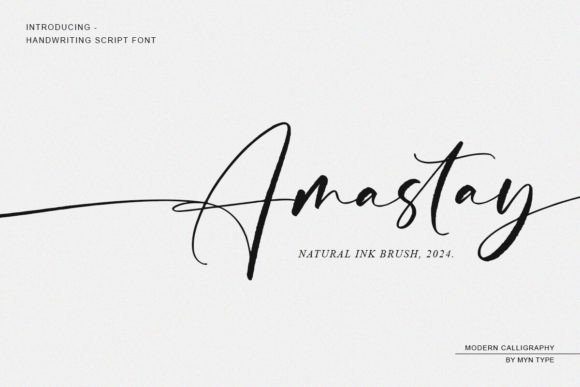
Amastay: The Elegant Handwriting Font for Modern Design
When it comes to typography, the right font can make all the difference in how a message is perceived. Amastay is one such font that stands out for its natural, organic feel and elegant cursive style. Designed with a swash tail, Amastay blends the texture of ink with the rhythm of handwriting, making it a versatile choice for a wide range of design projects.
What Makes Amastay Unique?
Amastay isn’t just another cursive font—it’s a carefully crafted typeface that captures the essence of handwritten script. The swash tail adds a touch of sophistication, giving each letter a flowing, artistic quality. This makes it ideal for designs that require a personal or refined touch.
The font’s organic feel comes from its textured stroke, which mimics the look of real ink on paper. Unlike many digital fonts that can feel stiff or artificial, Amastay brings a sense of warmth and authenticity. This characteristic makes it particularly appealing for branding, invitations, and editorial layouts where a human element is desired.
Practical Applications of Amastay
Amastay is not limited to just decorative uses. Its versatility allows it to fit into various design workflows. For instance, in the world of graphic design, Amastay can be used for logos, headings, and banners that need a unique identity. Its cursive style helps differentiate a brand while maintaining an air of elegance.
In the realm of publishing, Amastay can be used for book titles, chapter headings, or even body text in certain contexts. Its readability, combined with its stylistic flair, makes it a good choice for content that benefits from a more personal tone. Authors and editors often use it to add a distinctive visual element to their work.
For digital marketing, Amastay can enhance social media posts, email newsletters, and website headers. It adds a level of sophistication that can elevate the overall aesthetic of a campaign. When paired with modern sans-serif fonts, it creates a balanced contrast that draws attention without overwhelming the viewer.
Why Choose Amastay Over Other Fonts?
There are countless cursive fonts available, but Amastay offers a few key advantages. One of the most notable is its natural rhythm. Unlike some fonts that may appear forced or overly stylized, Amastay feels like it was written by hand, giving it a more authentic appearance.
Another benefit is its adaptability. Whether you're working on a high-end fashion brand or a simple blog post, Amastay can be adjusted to suit different needs. Its swash tail provides a subtle yet impactful detail that can be emphasized or minimized depending on the design requirements.
Additionally, Amastay is highly legible, even at smaller sizes. This makes it suitable for a variety of applications, from signage to mobile interfaces. Designers who want to maintain clarity while adding a stylish touch will find Amastay to be a reliable option.
How to Incorporate Amastay into Your Workflow
Integrating Amastay into your design process starts with understanding its strengths. If you're working on a project that requires a personal or artistic feel, consider using Amastay for headlines or key phrases. It works well when used sparingly, as overuse can reduce its impact.
When selecting colors, keep in mind that Amastay’s textured strokes may interact differently with various hues. Darker tones can emphasize the ink-like quality, while lighter shades may give a more delicate appearance. Experimenting with color combinations can help you achieve the desired effect.
For web use, ensure that Amastay is properly embedded or linked. Many designers use web-safe alternatives or convert the font into a format compatible with different platforms. Always test the font across devices to confirm its performance and readability.
Amastay in Different Industries
Amastay has found a home in several industries where aesthetics play a crucial role. In the fashion world, it’s often used for brand names and taglines that convey a sense of luxury and craftsmanship. Its cursive style aligns well with the creative and expressive nature of fashion design.
In the hospitality sector, Amastay is popular for menus, event invitations, and signage. Its elegant appearance helps set the tone for upscale dining experiences or boutique events. The font’s ability to evoke a handwritten feel makes it ideal for creating a welcoming and personalized atmosphere.
Even in technology and software development, Amastay has been adopted for UI elements and branding materials. Its clean yet artistic look helps balance the technical aspects of a product with a more approachable visual identity.
Considerations Before Using Amastay
Before incorporating Amastay into your project, consider the context in which it will be used. While it excels in design-heavy applications, it may not be the best choice for large blocks of text. Its cursive style can be harder to read in long paragraphs, so it’s best reserved for shorter, impactful statements.
Also, think about the audience. If your target demographic values tradition and authenticity, Amastay can resonate well. However, if your audience prefers a more modern or minimalistic style, you may need to pair it with other fonts to achieve the right balance.
Finally, always check the licensing terms before using Amastay in commercial projects. Some fonts have restrictions on usage, and ensuring compliance can prevent potential issues down the line.
Final Thoughts on Amastay
Amastay is more than just a font—it’s a tool that can enhance the visual storytelling of any project. Its blend of natural ink texture and elegant cursive style makes it a standout choice for designers looking to add a personal touch to their work. Whether you’re creating a logo, designing a website, or crafting a marketing campaign, Amastay offers a unique way to express creativity and sophistication.