Hatchill: A Playful Handwritten Script for Creative Expression
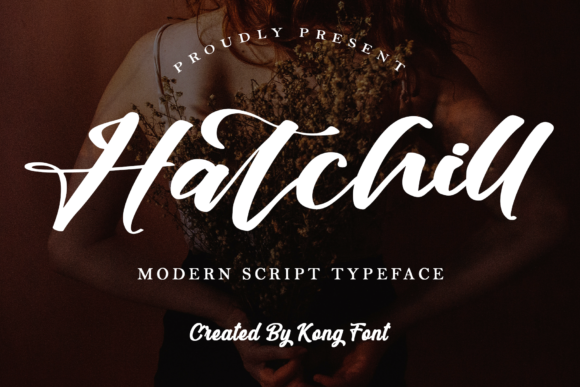
In the world of typography, fonts serve as more than just a means of communication—they are tools that shape visual identity and evoke emotion. Among the many fonts available, Hatchill stands out as a modern and playful handwritten script font that has captured the attention of designers, crafters, and creatives alike. With its unique blend of elegance and informality, Hatchill offers a versatile solution for a wide range of design projects. Whether you're working on wedding invitations, greeting cards, logos, or personal projects, Hatchill can bring a touch of personality and charm to your work.
Developed by Kong Font Studio and available through platforms like Creative Fabrica, Hatchill is designed with both aesthetics and functionality in mind. Its PUA (Private Unicode Area) encoding ensures that users have easy access to all the glyphs and ligatures, making it a practical choice for those who want to explore the full potential of the font without technical limitations. This level of accessibility allows for greater creative freedom, enabling designers to experiment with different typographic styles and expressions.
The appeal of Hatchill lies in its ability to bridge the gap between traditional calligraphy and digital design. Unlike rigid, geometric fonts, Hatchill mimics the natural flow of handwriting, giving each character a sense of movement and individuality. This makes it ideal for projects that require a personal touch, such as thank you cards, wedding stationery, or custom branding materials. The font’s fluid lines and soft curves create a warm and inviting aesthetic that resonates with audiences looking for something more authentic and expressive.
One of the key advantages of Hatchill is its adaptability across different mediums and formats. Whether used in print or digital media, the font maintains its clarity and readability without sacrificing its distinctive style. This versatility makes it a valuable asset for professionals in various industries, including graphic design, event planning, and marketing. For instance, a designer might use Hatchill to create a logo that conveys a sense of creativity and approachability, while a small business owner could incorporate it into promotional materials to establish a unique brand voice.
Another notable feature of Hatchill is its compatibility with other design elements. Because of its clean and balanced structure, it pairs well with both serif and sans-serif fonts, allowing for seamless integration into larger typographic compositions. This flexibility is particularly useful when designing layouts that require a mix of text styles, such as brochures, posters, or social media graphics. By combining Hatchill with complementary fonts, designers can achieve a cohesive look that enhances the overall visual impact of their work.
For hobbyists and independent creators, Hatchill offers an accessible way to elevate their projects without requiring advanced design skills. The font’s user-friendly nature makes it easy to apply in various software applications, from graphic design tools like Adobe Illustrator and Photoshop to online platforms such as Canva. This accessibility empowers individuals to experiment with typography and express their creativity in ways that were previously limited to professional designers.
When considering the use of Hatchill, it’s important to take into account the context and audience of the project. While the font’s playful and informal tone is perfect for casual or artistic endeavors, it may not be suitable for formal or corporate settings where a more structured appearance is expected. In such cases, alternative fonts that convey professionalism and authority might be more appropriate. However, for projects that aim to communicate warmth, creativity, or a personal connection, Hatchill can be an excellent choice.
Looking beyond its immediate applications, Hatchill also reflects broader trends in the design industry. There is a growing demand for fonts that offer a humanized and personalized feel, especially in an era where digital communication often feels impersonal. Hatchill aligns with this trend by providing a font that feels authentic and expressive, bridging the gap between the digital and the handmade. As more designers seek to differentiate their work through unique typographic choices, fonts like Hatchill are becoming increasingly valuable assets in the creative toolkit.
For educators and students, Hatchill can serve as an engaging resource for exploring the principles of typography and design. By studying how the font interacts with other elements, learners can gain a deeper understanding of how typefaces influence visual storytelling and user experience. Additionally, the font’s availability on platforms like Creative Fabrica provides an opportunity for aspiring designers to experiment with real-world projects and build their portfolios with high-quality, professionally crafted fonts.
Ultimately, Hatchill is more than just a font—it is a tool that inspires creativity and adds a layer of personality to any design. Its combination of playfulness, versatility, and accessibility makes it a valuable addition to the repertoire of designers, hobbyists, and businesses looking to make a lasting impression. Whether used in a simple card or a complex branding campaign, Hatchill has the potential to transform ordinary text into something truly memorable.
As the design landscape continues to evolve, the importance of thoughtful typography will only grow. Fonts like Hatchill play a crucial role in this evolution by offering new ways to express ideas and connect with audiences. For those who appreciate the beauty of handcrafted design and the power of typography, Hatchill represents an exciting opportunity to explore the intersection of artistry and technology in meaningful and impactful ways.